
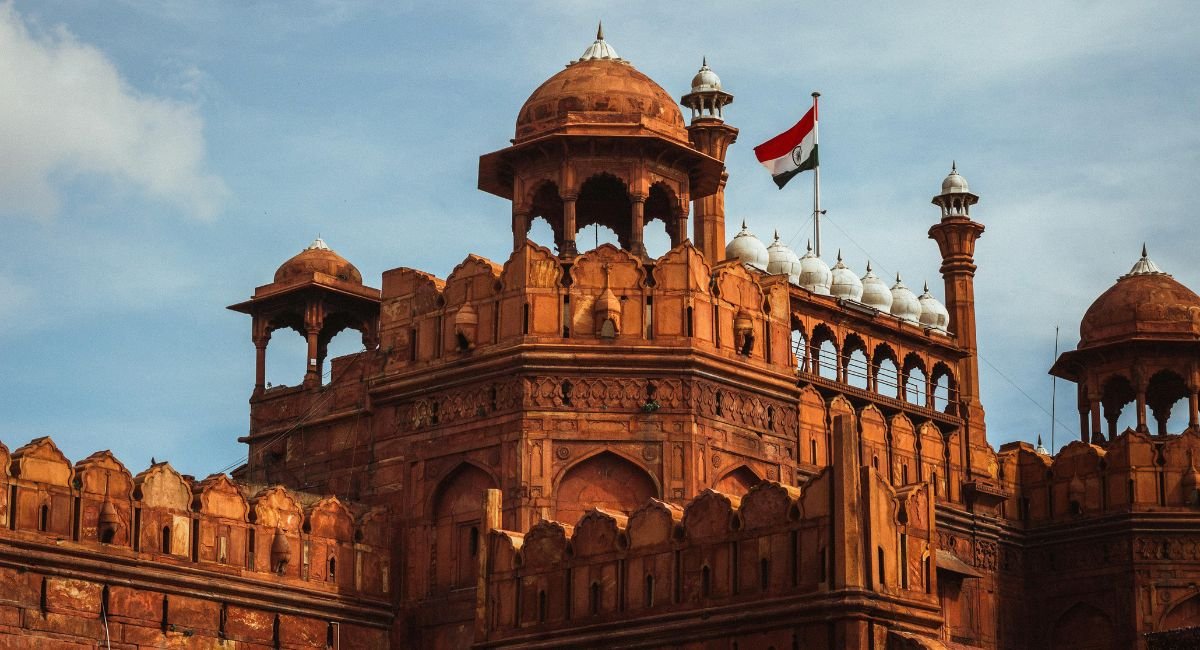
Old Delhi chaat is not just food; it is a legacy passed down through generations. When people say, “Real chaat can only be found in Old Delhi,” they are not exaggerating. From the narrow lanes of Chandni Chowk to modern weddings, corporate events, and luxury celebrations, Old Delhi chaat has travelled a long journey—without losing its soul.
To understand why Old Delhi chaat is so famous, one must go back in time, to an era when food was prepared with patience, recipes were guarded like family heirlooms, and only a handful of caterers were trusted with feeding entire communities.
The Birthplace of Chaat: Old Delhi’s Cultural Foundation
Old Delhi, historically known as Shahjahanabad, was established in the 17th century as a centre of trade, culture, and craftsmanship. The area was always crowded—traders, travellers, workers, and locals moving through bustling markets every day.
In such an environment, food had to meet three basic requirements:
- It had to be quick
- It had to be affordable
- It had to be flavourful
This is where chaat was born.
The word “chaat” itself comes from the Hindi word chaatna, meaning to lick. It reflects the irresistible nature of the food—so tasty that people would lick their fingers after eating it. Old Delhi perfected this concept by balancing sweet, sour, spicy, and tangy flavours in a way no other region could replicate.
An Era of Limited Caterers and Deep Trust
Unlike today, Old Delhi was not flooded with catering businesses. During the mid-20th century (roughly the 1950s to the 1980s), there were very few trusted caterers who handled large community events, weddings, and religious functions.
These caterers were not brands in the modern sense. They were family-run operations, often working from the same neighbourhoods for decades. Their reputation was built purely on:
- Taste consistency
- Hygiene (by the standards of that time)
- Reliability
- Community trust
Among these traditional names were legacy caterers such as Hari Ram Caterers, along with a few other Old Delhi–based families whose names were known within the community even if they were never advertised.
At that time, there were no menus printed on glossy paper. People booked caterers based on memory:
“Last wedding mein inka khana best tha.”
That single line was enough to secure the next booking.
Why Old Delhi Chaat Was Different from the Beginning
Old Delhi chaat stood apart not because of fancy ingredients, but because of process, patience, and philosophy.
Hand-Ground Masalas
Masalas were never bought from outside. Every family prepared their own spice blends by hand, often early in the morning. The exact proportions were never written down—they were memorised and passed from one generation to the next.
Fresh Preparation, Every Single Day
There was no concept of bulk storage. Potatoes were boiled fresh. Chole were soaked overnight and cooked slowly. Chutneys were prepared daily using fresh mint, coriander, tamarind, and jaggery.
Balance over Heat
Unlike many modern interpretations of chaat that focus only on spiciness, Old Delhi chaat was always about balance. Sweetness never overpowered sourness, and spice never masked flavour.
From Street Corners to Community Functions
In its early days, chaat was primarily street food—sold near temples, markets, and evening gathering spots. Over time, its popularity grew so much that people began requesting it at:
- Weddings
- Engagement ceremonies
- Religious gatherings
- Community feasts
This transition was not easy. Preparing chaat for large gatherings required discipline and precision. This is where experienced Old Delhi caterers stepped in.
They adapted street food recipes for large-scale preparation while preserving the original taste. This is how chaat moved from street corners to wedding pandals—without losing its identity.
A Time When Supply Was Limited but Demand Was Endless
There was a period when a single Old Delhi caterer would handle multiple weddings during peak seasons. Bookings were made months in advance, sometimes based purely on word-of-mouth recommendations.
Marketing did not exist. There were no banners, no websites, no social media. Reputation travelled through conversations:
- Between relatives
- Across neighbourhoods
- Through entire communities
If a caterer failed once, word spread just as fast. This created an environment where quality was non-negotiable.
The Evolution of Old Delhi Chaat into Modern Catering
As time passed, the food industry evolved. By the late 1990s and early 2000s:
- Hygiene standards improved
- Live counters became popular
- Presentation became important
Old Delhi chaat adapted—but it never changed its core.
Live chaat counters began appearing at weddings and corporate events. Chefs wore uniforms. Gloves replaced bare hands. Stainless steel replaced wooden carts. Yet, the recipes remained the same.
The aloo tikki was still crisp on the outside and soft inside. The golgappa pani still carried that unmistakable Old Delhi tang. The dahi bhalla was still light and perfectly balanced.
Why Old Delhi Chaat Remains Unmatched Today
Despite global cuisines entering the Indian market—Italian, Mexican, Pan-Asian—Old Delhi chaat continues to dominate event menus.
The reasons are simple:
- It is vegetarian and widely acceptable
- It suits all age groups
- It is light yet satisfying
- It allows customisation for spice and sweetness
- It carries nostalgia
For many people, Old Delhi chaat reminds them of childhood, family functions, and shared memories.
The Emotional Connection with Food
Old Delhi chaat is deeply emotional. It is connected to:
- Family gatherings
- Festivals
- Weddings
- Childhood outings
This emotional bond is something no modern cuisine can easily replace. When guests see a live Old Delhi chaat counter at an event, it immediately creates comfort and familiarity.
From Chandni Chowk to Corporate Events
Today, Old Delhi chaat has travelled far beyond its birthplace. It is now served at:
- Luxury weddings
- High-end house parties
- Corporate events
- Product launches
Yet, its roots remain the same. The flavours still originate from the same principles developed decades ago in the lanes of Old Delhi.
Why Old Delhi Chaat Will Never Lose Its Relevance
Food trends come and go. But Old Delhi chaat survives because it is not a trend—it is tradition.
As long as people value:
- Authentic taste
- Cultural roots
- Honest food
Old Delhi chaat will continue to thrive.
It has survived generations, economic changes, and culinary trends—and it will continue to do so.
Final Thoughts
The fame of Old Delhi chaat is not accidental. It is the result of decades of dedication by a small group of passionate food families, limited but legendary caterers, and a community that valued taste over everything else.
From a time when only a few trusted names handled entire neighbourhood weddings to today’s large-scale events, Old Delhi chaat has remained unchanged at its heart.
That is why, even today, people say:
“Old Delhi chaat ka taste kahi aur nahi milta.”
And they are absolutely right.
